
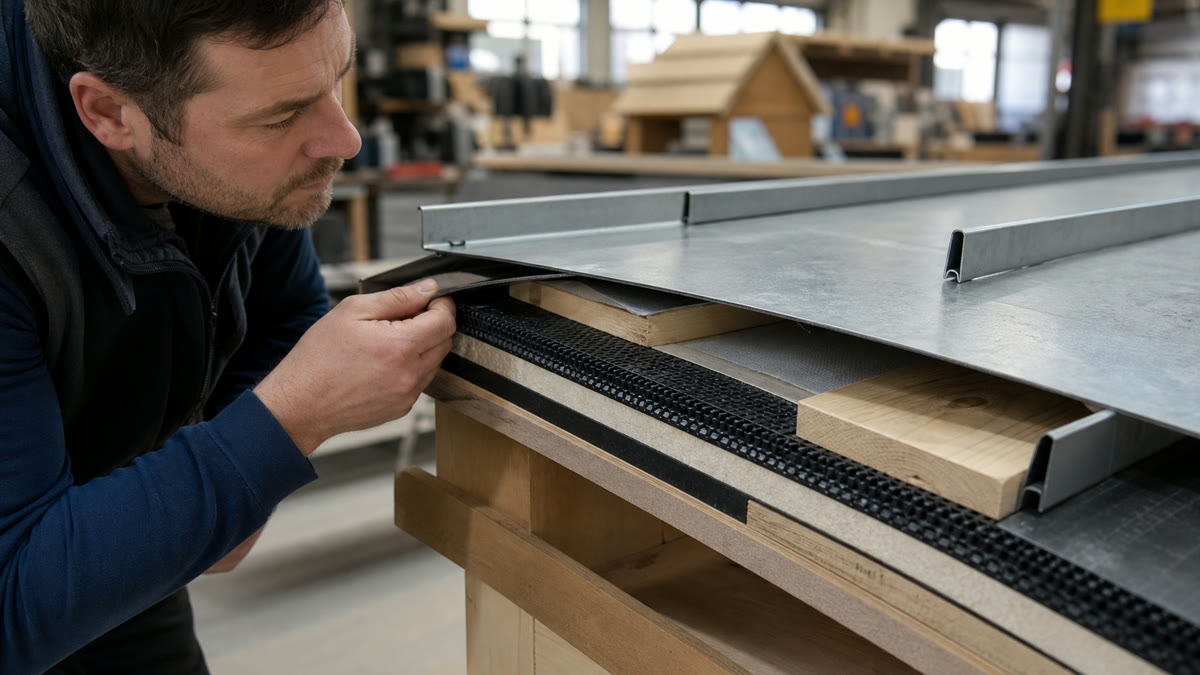
A practical guide to why correctly designed ventilation and build-up details matter beneath VMZINC standing seam roofs.
A VMZINC standing seam roof is only as reliable as the build-up beneath the visible metal. The supporting deck, separation layer, ventilation route and internal air-control layers all need to work together. Treating the zinc as a decorative outer skin without considering moisture movement can create avoidable problems within the roof construction.
Ventilated and compact warm-roof systems are not interchangeable. The correct approach depends on the roof design, pitch, substrate and building use. Where a ventilated build-up is specified, a continuous airflow path and correctly sized openings at the eaves and high points help remove moisture before it can accumulate beneath the zinc.
Continuity matters around rooflights, valleys, hips, penetrations and changes in pitch. These details can interrupt airflow or create cold areas if they are improvised on site. They should be resolved during the design stage so the zinc detailing, insulation and moisture-control strategy remain compatible.
Good workmanship also includes using compatible membranes and fixings, providing the specified separation layer, and avoiding blocked ventilation paths. VMZINC installation guidance and the project designer’s condensation-risk assessment should govern the final build-up rather than a one-size-fits-all detail.
The Specialist Roofing Company installs VMZINC roofing and cladding across Surrey, Berkshire and London. Early technical input helps turn the chosen roof build-up into practical junctions that can be formed cleanly and maintained over the long term.
If you are planning similar work, see our roofing materials and our work or contact The Specialist Roofing Company for a free quote.